Home / Waterfalls / Mariyudu Falls
Mariyudu Falls マリユドゥの滝
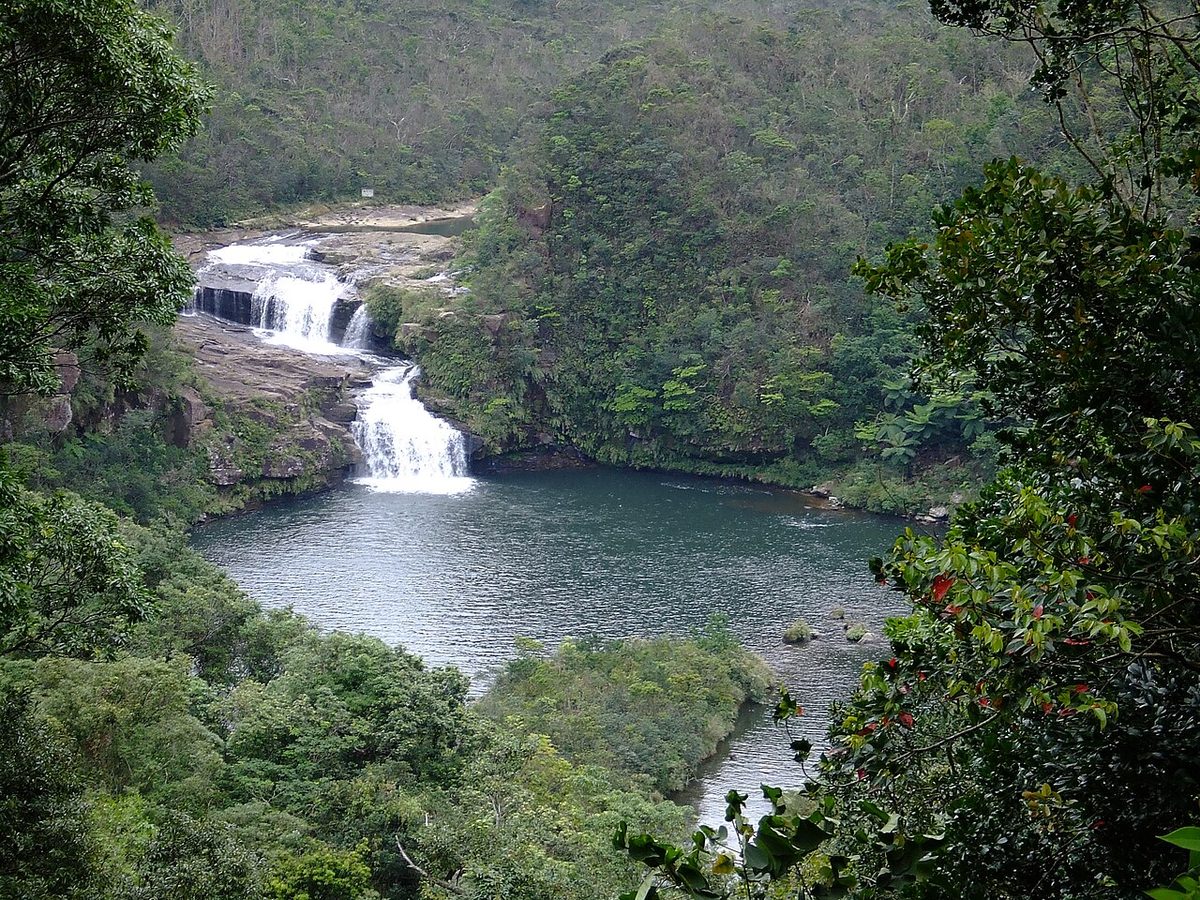

| Drop | 20 m (66 ft) |
|---|---|
| Width | 16 m (52 ft) |
| River | Urauchi River |
| Location | Uehara, Okinawa, Japan |
| Region | Kyushu |
| Selected Waterfalls list | No. 100 of the 100 Selected Waterfalls of Japan (Nihon no Taki Hyakusen, 1990) |
| Coordinates | 24.35719° N, 123.80319° E |
Mariyudu Falls. The the 100 Selected Waterfalls of Japan was chosen.
Overview
It's the longest Okinawa river that comes from the mountains in the middle of the Western Peninsula, and it's located in the upper part of the Mariyudu Falls. The difference is not as large as about 16 meters, but it's divided in two and has an ellipse-shaped waterfall with a long diameter of 130 meters and a short diameter of 80 meters. Like other waterfalls on the west side of the island, the cliffs are sandstones. About 250 meters up there are Campilay waterfalls, and they are also typical tourist attractions of the West Island.
Her name
"Mari" is "circle" and "Udu" and "yuduu" is "yudu" in the sense of "i" and "i" is not a waterfall, but the name of the waterfall. "Mari" means "Marri," meaning "circuit," and is derived from the water falling on the pot. In the upper stream of Campley Falls, there is a boulder about four kilometers long, and it is called the nayudu for Mariyudu. Mariyudo Falls, Mariud Falls, Mariud Falls, Malud Falls, Malud Falls, Malud Falls, Malud Falls, Malud Falls, Malud Falls, and others have been put in various places.
Nature
The natural landscape is excellent and is set up as a natural rest forest. There's a forest of wood oak around the waterfall. The Uru River has a long train area, directly below Mariyudu Falls, and a fish reserve of about 400 species of fish. Of these, in Japan, there are five species of sea horses that live only on the west side of the island, and the five species of sea horses that live only on the west side of the island. In 2015, zXQ012X is installed in the lower flow of water to prevent water from drying, and there are concerns about the environmental effects. The waterfall pot is home to eels, sea eels, and sea cucumbers.
Tradition
The upper section of the river, including this waterfall, has been made sacred. According to the Book of Yasakashima in 1727, it was then called the Wesen Reservation, but in the early summer of April - May) fire and eating and drinking were strictly prohibited, and food was removed. There's a monster in the waterfall pot, a monster that shows up on the water as people approach it on the day of the storm and the day of the storm, and it's reported that the person who saw it died of a high fever. "Sabba" is also thought to mean "murder" in their dialect, and "saba" is also thought to be a shark living in fresh water. There's also a legend that crocodiles lived in the waterfall pot. It was reported that the crocodile was washed off the beach at Tuduma, near the mouth of the river, and then sank into the remote islands of the southwest of the West Bank, the nets, the mountains and the deer rivers. Since "the crocodile" means "flaga" in its dialect, and since the river's waters are covered by a large number of white sharks, which are about five feet long, there are theories that some of the crocodile traditions that spread on the west side of the island refer to this species. There is also a theory that the crocodile is the saltwater crocodile from Southeast Asia.
Access
From the banks of the Uru River to the battleship rocks about five miles up the river, and it's about 40 minutes away on the trail that follows it. There are exhibitions that want this waterfall on the way to play.
Text adapted from the Japanese Wikipedia article マリユドゥの滝, whose full text was translated into English for this guide by its contributors, licensed CC BY-SA 4.0. Drop and location facts cross-checked with Wikidata (CC0) and the 100 Selected Waterfalls of Japan list (Japanese Wikipedia, CC BY-SA 4.0).